
Berlin New Media Week 2026
From 2–6 September 2026, the citywide festival returns for its second edition, once again placing Berlin at the intersection of art, technology and contemporary culture.
The citywide platform bringing together artists, curators and technologists across new media art, digital culture, audiovisual performance and electronic experimentation.
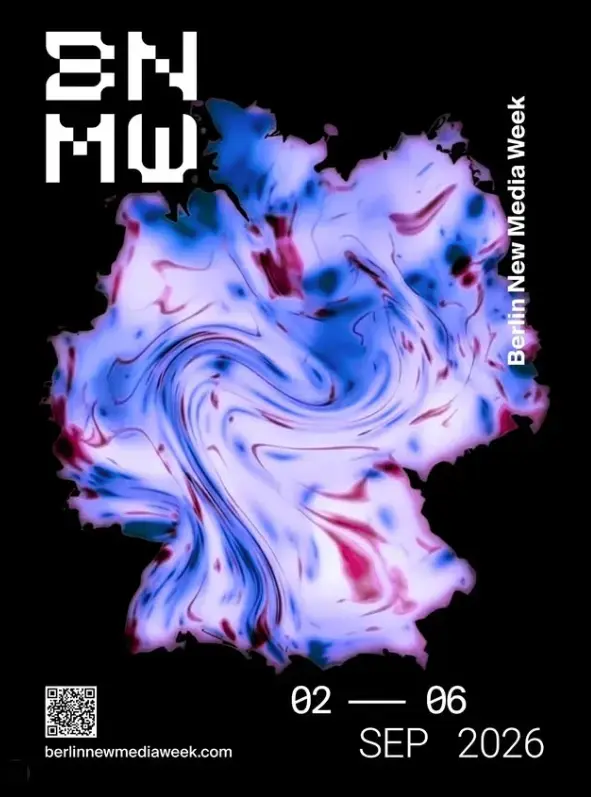
Berlin New Media Week returns to the German capital from 2 to 6 September 2026, continuing its mission to celebrate Berlin as a global epicentre for digital art and creative technology. Across five days, galleries, cultural spaces and unconventional venues will become a distributed platform for audiovisual performance, electronic music, interactive installations, digital experimentation and AI-driven practices.
The second edition begins on 2 September, with an opening night at one of Berlin’s most spectacular venues — a space that will also host several key events throughout BNMW 2026. After a first edition that activated the city through a decentralised network of artists, curators, studios and cultural organisations, the question now is not simply what will return, but how much further the format can go.

What Made BNMW One to Watch.
Before Berlin switches on again this September, it is worth looking back at the edition that set the frequency. In 2025, the inaugural Berlin New Media Week unfolded across 14 venues and 35 events, connecting locations including Studio1111, MaHalla, Prachtsaal Studio, Dock11, B-Dome and DAM Projects. At the centre of this distributed programme were three projects produced and curated directly by the BNMW team: the opening launch party, Digital Nature, and the ambitious exhibition Intelligent Kin. The official 2025 programme stretched across five days and multiple locations throughout Berlin, working with local organizers and artist-led spaces ot bring a fragmented scene, together.
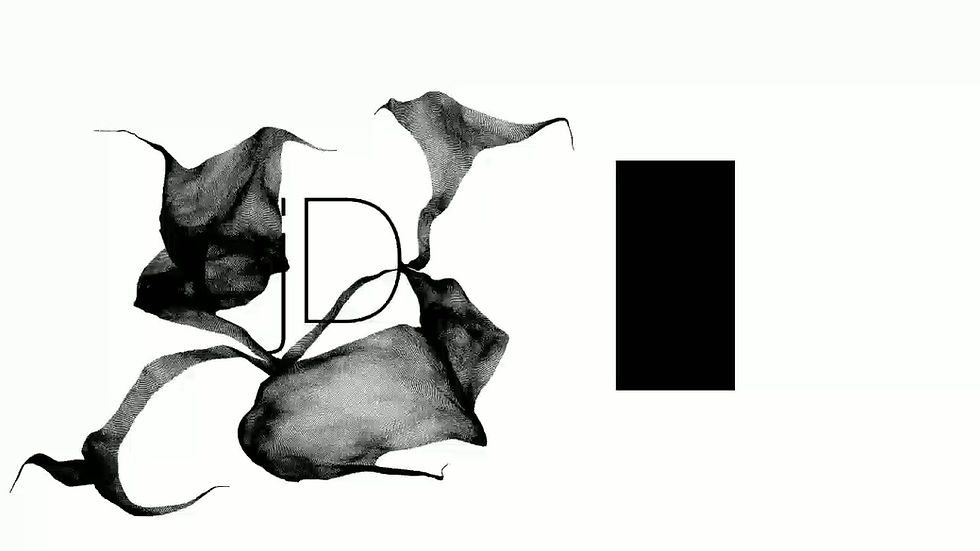
Structures by Pauric Freeman
Through Sound and Image
BNMW 2025 began at Studio1111 with an audiovisual launch night built around three international acts working across image, sound, live systems and performance. Rahul Sharma and Daniel Rudolf, performing as TRANSONIC, were followed by Ninon and Victor Calvi, before Dublin-based artist Pauric Freeman closed the programme with his Berlin debut.
Freeman was a particularly fitting presence for an event concerned with the increasingly fluid boundaries between image, sound and computation. Well known within the real-time audiovisual and TouchDesigner community, his practice develops custom systems in which sonic information becomes the material for live visual composition. His work has travelled internationally across Europe, North America, Asia and Australia, while maintaining an experimental approach in which sound and image operate as interconnected rather than illustrative systems.

Andrea Familiari, Atoll l
One of the most ambitious projects of the inaugural edition was Intelligent Kin at MaHalla, an exhibition that moved beyond a conventional definition of artificial intelligence to consider intelligence as something digital, biological, relational and imagined. Immersive installations, interactive systems, speculative AI works and performances were organised around questions of perception, evolution and relation , less interested in asking what machines can do than in examining what kinds of beings we are becoming alongside them.
Among the works most directly engaging with AI was Andrea Familari’s Atoll I. Developed from the interactive installation Relate - Talk with Me, in which visitors conversed about relationships with a custom-designed AI agent represented by an avatar, the video transforms transcripts of these encounters into a shifting archive of intimacy. Memories, emotional attachments, detachment and even relationships with AI itself coexist within voices whose authenticity is deliberately left uncertain. Familari’s wider practice similarly investigates how AI and technology are reshaping human relationships, communication and perception.


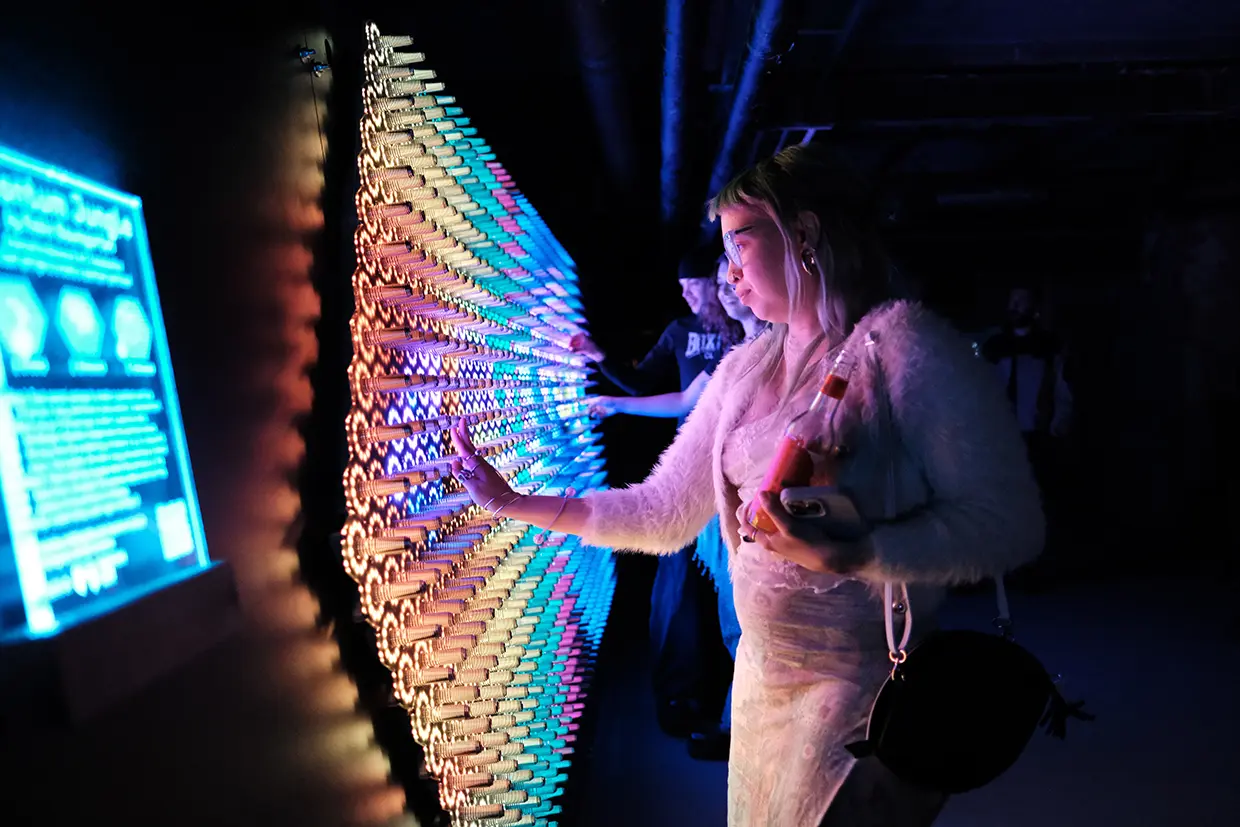
The physical experience of the exhibition, however, immediately complicated any expectation of entering a purely technological environment. Visitors were greeted by the striking sculptural installation wearewaters by Yulia Popova and Dani Miranda, accompanied by the sound of flowing water and children playing in a park. Exploring the symbolic and sensory qualities of communal water spaces, the work shifted attention toward bodies, memory and coexistence. Elsewhere, Robin Baumgarten brought his characteristically tactile approach to interactive art — a practice built around physical response, play and the meeting point between hardware and human touch.
The physical experience of the exhibition, however, immediately complicated any expectation of entering a purely technological environment. Visitors were greeted by the striking sculptural installation wearewaters by Yulia Popova and Dani Miranda, accompanied by the sound of flowing water and children playing in a park. Exploring the symbolic and sensory qualities of communal water spaces, the work shifted attention toward bodies, memory and coexistence. Elsewhere, Robin Baumgarten brought his characteristically tactile approach to interactive art — a practice built around physical response, play and the meeting point between hardware and human touch.


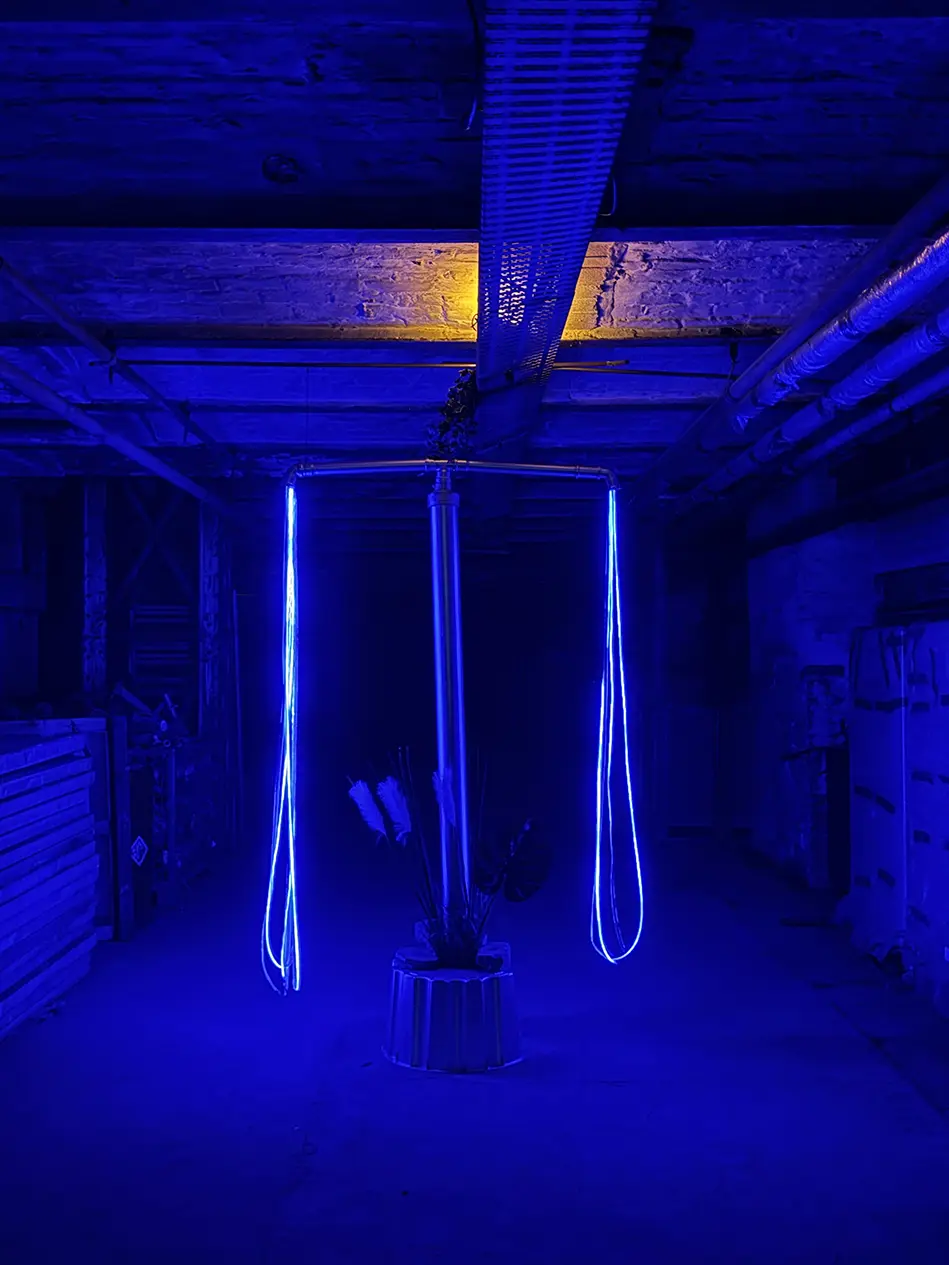
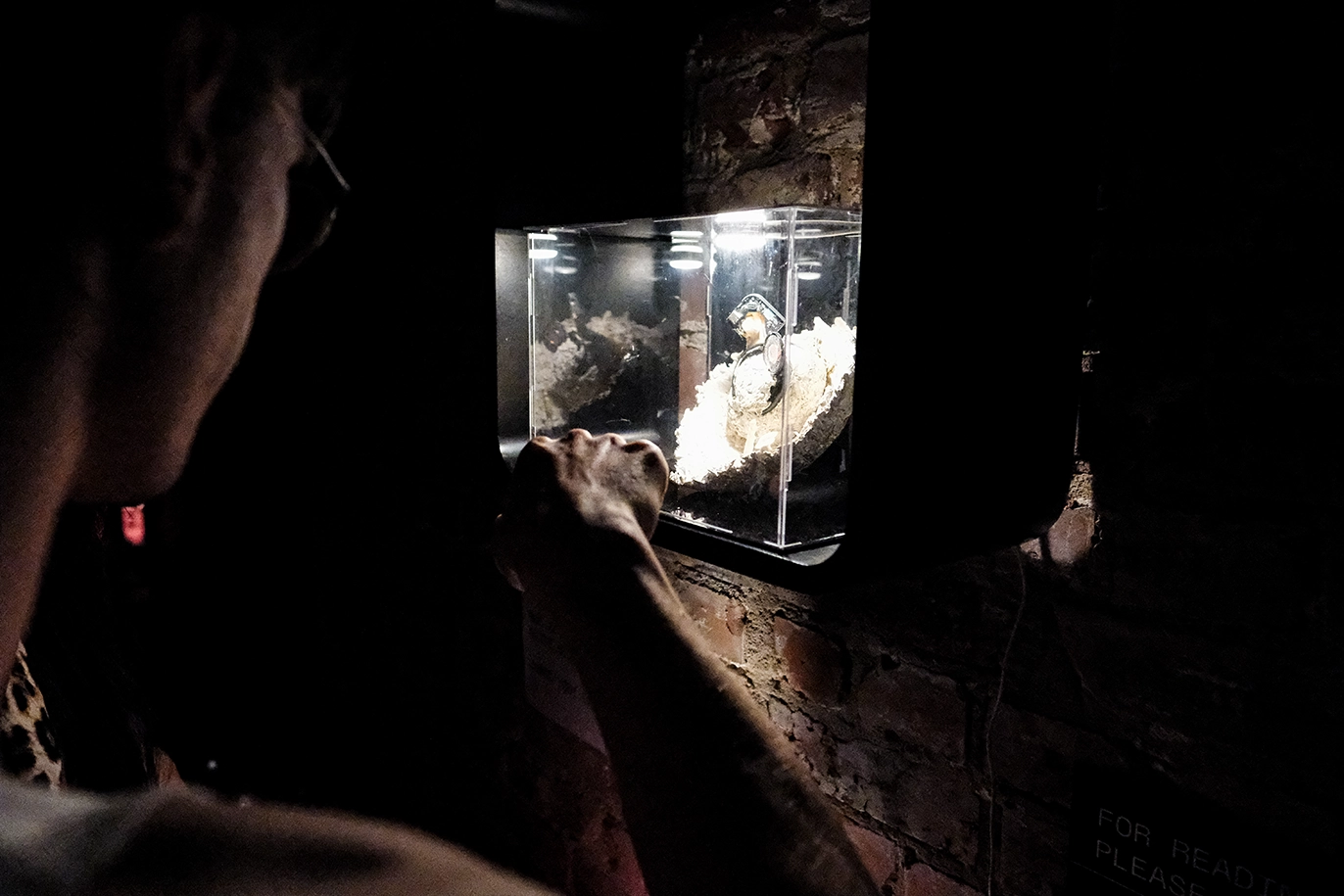
A particularly compelling counterpoint came from Kshitija Gurav’s Entangled Systems. Rather than imagining technological progress through increasingly sophisticated machines, Gurav looks towards their remains: obsolete digital media, electronic waste and mycelium. Set within a speculative future in which discarded technologies have become entangled with fungal networks, the sculptural series imagines new bio-digital ecologies emerging through decay. Gurav’s broader practice sits at the intersection of design, ecology and futures, with a focus on environmentally conscious forms of creative research.
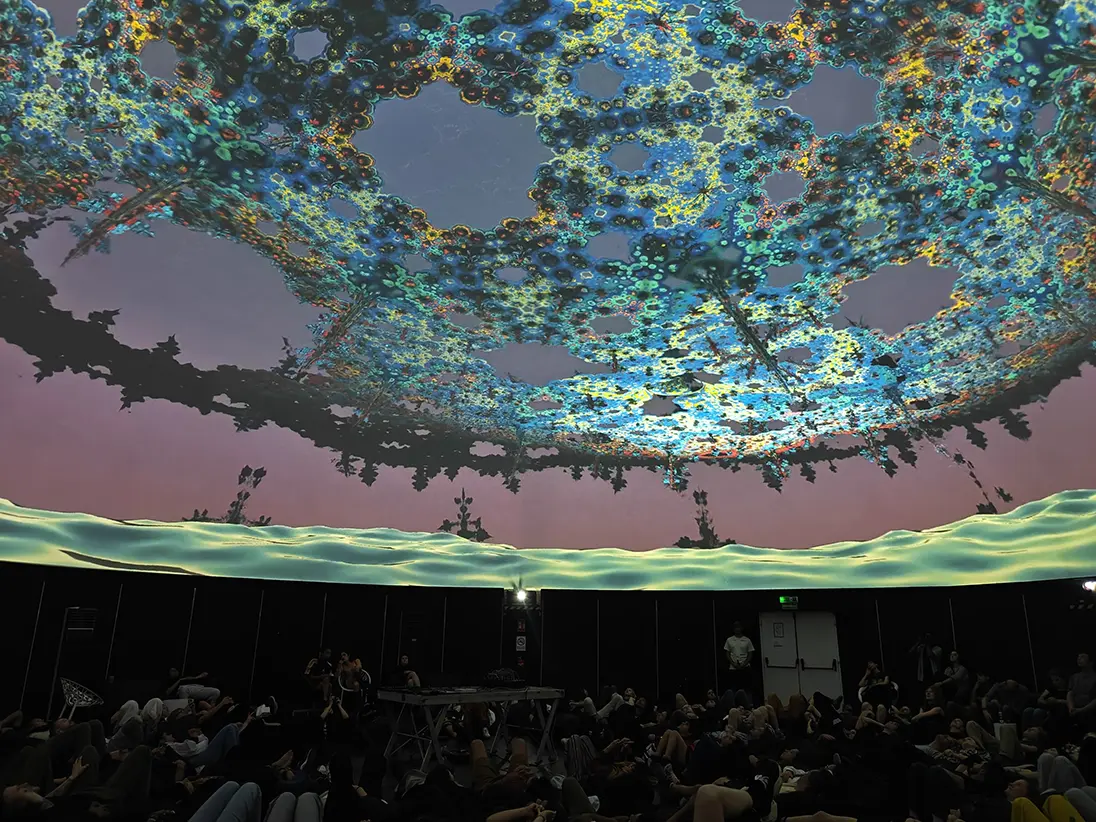
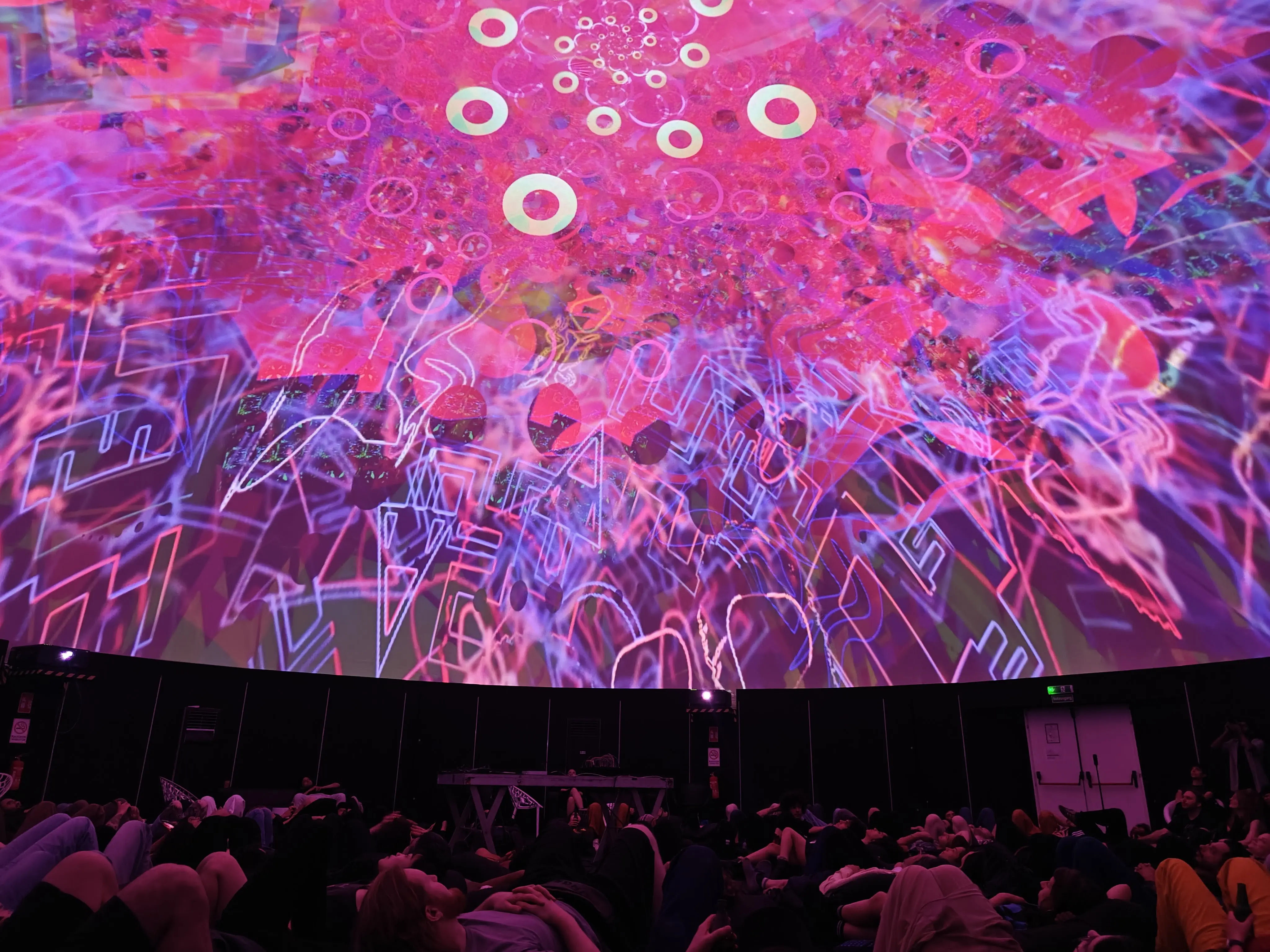
The programme brought together artists including Makoto Inoue, Hsiao Li Chi, Izzy Benigno and Bibi Cavalcanti, and Danny Garcia (MTHIC). Inoue — a Berlin-based new media artist and techno producer whose audiovisual practice has also appeared at MUTEK Tokyo — brought a live dimension to the dome. Hsiao Li Chi’s Resonance of the Virtual moved between physical and digital perception, while Benigno and Cavalcanti’s SeedEye drew from the Waraná seed and Amazonian knowledge systems, imagining the seed itself as an interface: a living archive capable of carrying memory through growth and transformation..
Yulia Popova e Dani Miranda

What Comes Next
The first Berlin New Media Week established a network that moved freely between exhibitions, performances, experimental technology, sound, physical materials and new ways of thinking about digital culture. From 2–6 September 2026, BNMW returns for Edition 2 and Prompt Magazine is excited to join the event as an official media partner.
Follow Berlin New Media Week for the upcoming programme, artists and further announcements as the second edition approaches.
2026 Participating Venues: THE_SPACE Kudamm, Studio1111, Prachtsaal Studio, Galerie And, DAM Projects, School of Machines, LA18, MARMORBAR, Zemin Art Space, The NODE Institute
Event Location Berlin New Media Week 2026
Confirmed Participating Venues